close

Welcome Back

Please log in to continue.

Login

Forgot Your Password?

Create Account

Join our community.

Register


Reset Password

Enter your email to receive reset link.

Reset Password

Verify Email

Please check your email for a verification link.

Verify Your Email

Before proceeding, please check your email for a verification link.

Two-Factor Verification

Enter the 6-digit code from your authenticator app to continue.

Verify Code

Research

Research Interests

Intelligent engineering systems, physics-informed modeling, machine learning, materials, sensing, and autonomous decision-support for complex engineering problems.

What We Study

AI-enabled engineering research for physical systems

The Intelligent Engineering Systems Lab develops computational and data-driven methods to understand, model, and optimize engineering systems. Our research connects mechanics, materials, machine learning, sensing, and autonomous systems with applications in aerospace, energy, manufacturing, and environmental engineering.

Research Themes

Core Research Directions

From first-principles up to micro scale 

Material Genomics
Research Theme

Material Genomics

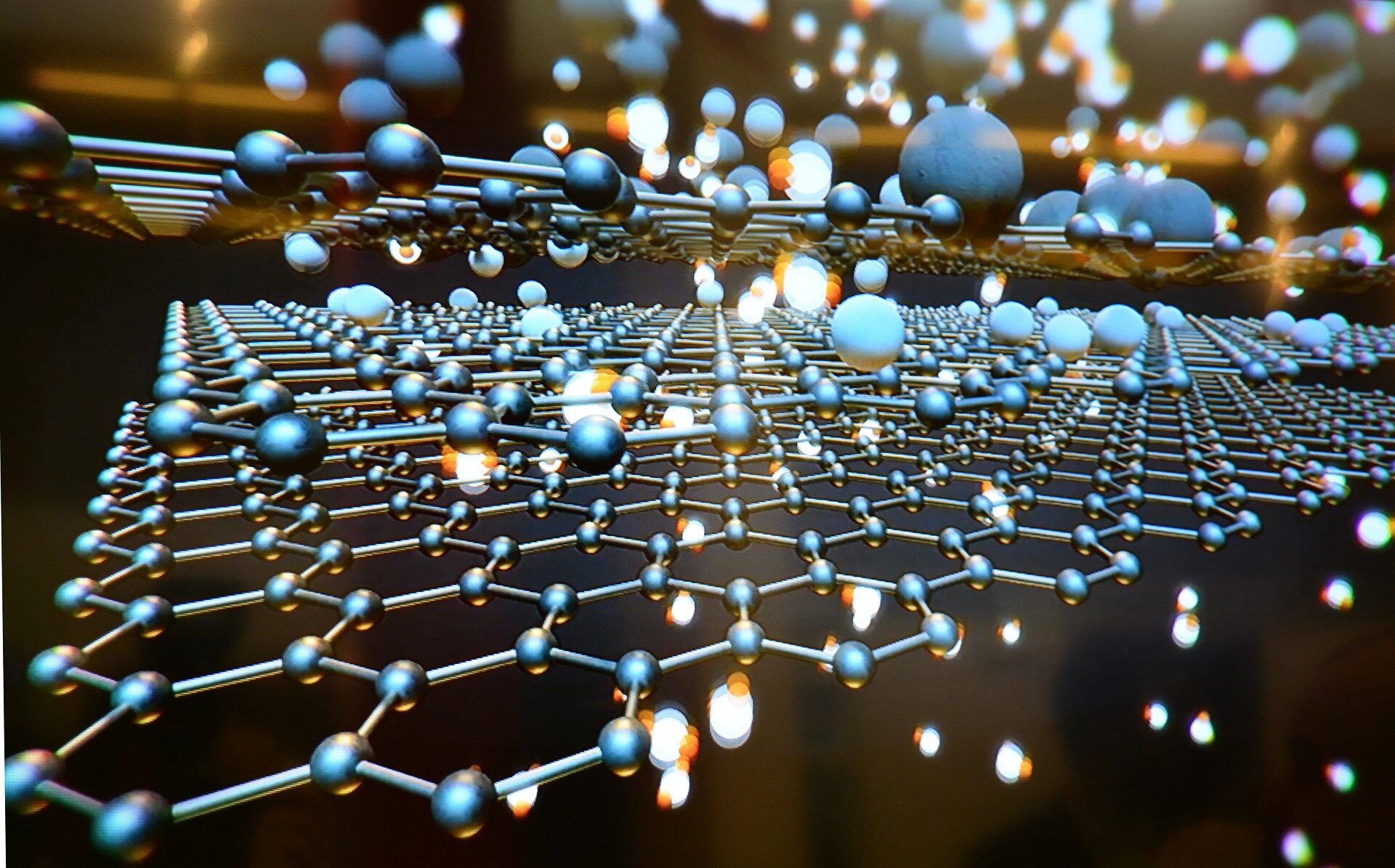
Our research focuses on accelerating the discovery and optimization of advanced materials by combining graph neural networks (GNNs) with generative artificial intelligence. We develop machine learning models that learn the relationship between atomic structure, chemical composition, and material properties directly from large-scale computational and experimental datasets. GNNs are used to accurately predict properties such as stability, ion transport, electronic behavior, mechanical performance, and catalytic activity, while generative models explore vast chemical design spaces to propose entirely new materials with targeted functionalities. By integrating physics-based simulations, density functional theory, and explainable AI, our models enables rapid screening and inverse design of next-generation materials for applications including energy storage, catalysis, semiconductors, structural materials, and sustainable technologies. This AI-driven approach significantly reduces the time and cost required for traditional trial-and-error materials discovery while providing fundamental insights into the underlying materials physics.

Know More
HIgh Entropy Alloys
Research Theme

HIgh Entropy Alloys

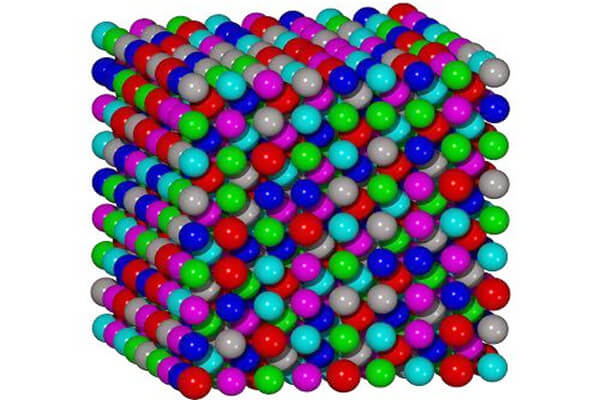
Our research develops next-generation high-entropy alloys (HEAs), medium-entropy alloys (MEAs), and other advanced structural materials for extreme operating environments, including aerospace, energy, nuclear systems, additive manufacturing, and hydrogen infrastructure. We integrate physics-based simulations across multiple length scales—including density functional theory (DFT), atomistic simulations, phase-field modeling, crystal plasticity, and continuum mechanics—with artificial intelligence and machine learning to accelerate alloy discovery, understand microstructure evolution, and predict mechanical behavior, environmental degradation, and long-term reliability. By combining computational modeling with experimental collaborations, our goal is to establish AI-enabled frameworks for the autonomous design of high-performance materials with tailored strength, ductility, fracture resistance, radiation tolerance, and corrosion resistance.
Know More
Computational Fluid Mechanics and Multiphase Transport
Research Theme

Computational Fluid Mechanics and Multiphase Transport

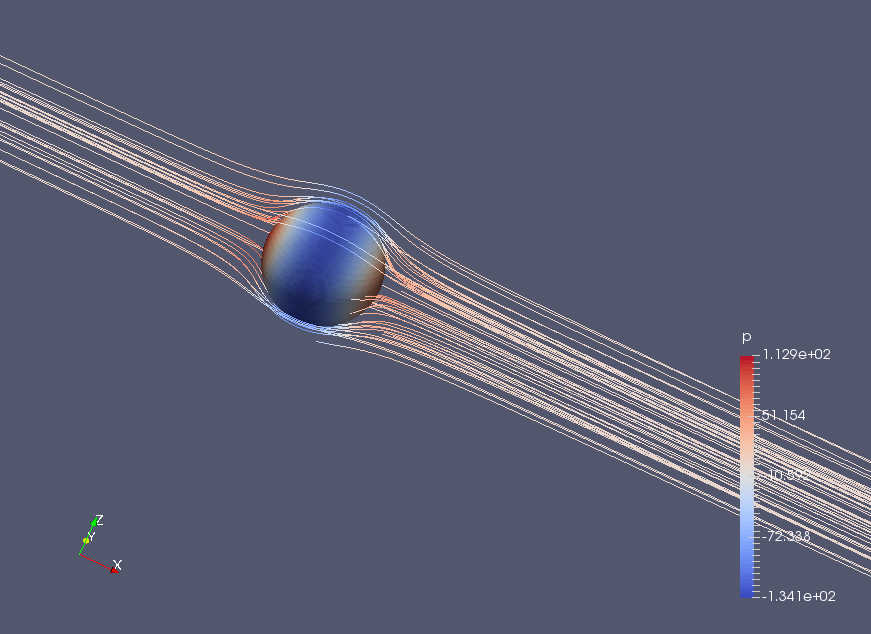
Our research develops high-fidelity computational fluid dynamics (CFD) models to understand complex transport phenomena involving turbulent flows, multiphase systems, and fluid–structure–particle interactions. We combine physics-based simulations, advanced numerical methods, and artificial intelligence to investigate how fluid dynamics influence the transport, deposition, and evolution of particles across engineering and environmental systems. Current research includes an NSF-supported collaborative project led by Dr. Liyuan Hou at Utah State University on microplastic transport in turbulent flows, where we develop computational models to investigate the coupled effects of biofilm growth, hydrodynamic forces, and particle dynamics, with the goal of revealing the mechanisms governing contaminant fate in aquatic environments. More broadly, we aim to develop predictive computational frameworks that enable data-driven analysis and intelligent design of transport processes in environmental, energy, and manufacturing applications.
Know More
AI for Biological Signal Intelligence
Research Theme

AI for Biological Signal Intelligence

We develop machine learning and artificial intelligence methods for understanding complex dynamical systems through the analysis of multivariate time-series and spatiotemporal data. By integrating signal processing, statistical learning, deep learning, and uncertainty quantification, we seek to identify hidden patterns, infer system behavior, and enable data-driven scientific discovery. As a co-investigator on a W. M. Keck Foundation–supported project led by Dr. Erika Espinosa-Ortiz at Utah State University, our group develops machine learning approaches to analyze electrical signaling in fungal networks, with the goal of uncovering communication patterns and emergent biological dynamics from complex electrophysiological data. The methodologies developed through this collaboration are broadly applicable to engineering systems involving sensor networks, structural health monitoring, energy storage, and autonomous manufacturing.

Energy Stoarge Materials
Research Theme

Energy Stoarge Materials

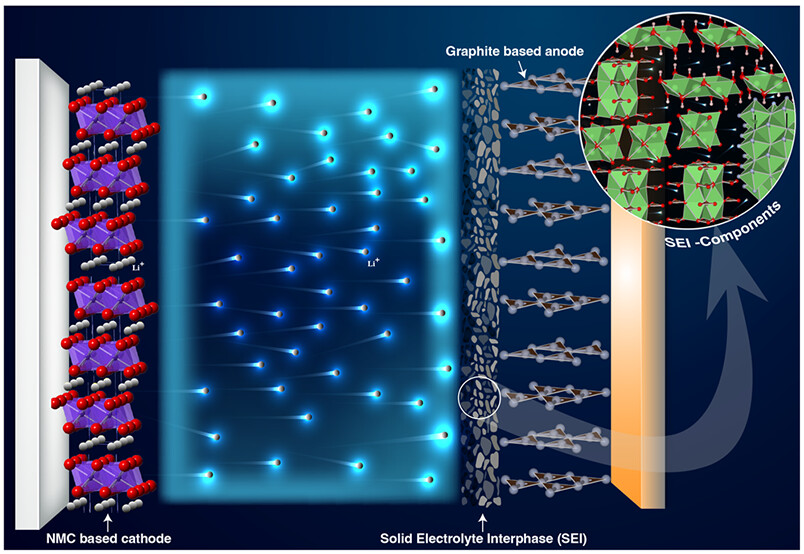
We develop computational and artificial intelligence approaches to accelerate the discovery, design, and optimization of next-generation energy storage materials. Our research integrates first-principles calculations, multiscale modeling, electrochemical simulations, and machine learning to understand the fundamental mechanisms governing ion transport, interfacial reactions, phase transformations, and materials degradation. Current applications include lithium-ion batteries and aluminum–air batteries, where we investigate electrode materials, solid electrolyte interphases (SEI), catalytic reactions, and electrochemical performance to enable safer, higher-energy-density, and longer-lasting energy storage systems. Our long-term vision is to establish autonomous computational frameworks that combine physics-based modeling with AI to accelerate innovation across a broad range of electrochemical energy technologies.
Know More